
Telcos have become critical infrastructure brands, and that shift makes trust a balance-sheet asset. Marketing cannot outspend broken trust — trust is the multiplier that decides whether the spend works at all.
A telco today is not selling connectivity so much as it is operating critical infrastructure that happens to also carry a brand name. Payments, identity, data, emergency communication — all of it now runs through the same network a customer once bought purely for call minutes. That shift changes what marketing can and cannot fix. No amount of media spend restores a network that customers no longer trust with their money or their data, which means trust has quietly become a balance-sheet asset rather than a soft brand metric, and the multiplier that decides whether every other marketing dollar actually works.
The operating environment is hardening fast
What makes this moment different from previous telco trust scares is that the risk is no longer contained to reputation. A single incident — a SIM-swap fraud wave, a data-misuse allegation, a poorly handled outage — now carries regulatory, financial and brand risk simultaneously, and regulators in the region are treating data governance failures as compliance events rather than PR problems. That means the cost of a trust failure has moved from the marketing budget line to the balance sheet.

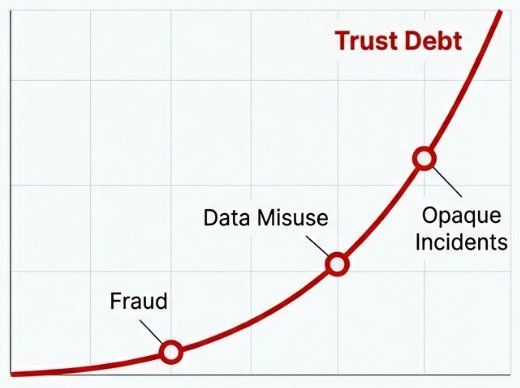
Trust debt compounds silently until it doesn’t
Trust, once damaged, does not recover on a campaign timeline. Rebuilding it requires a combination of an improved product experience, credible assurance mechanisms, and a consistent public narrative — sustained over time, not announced once. Every unresolved harm event left unaddressed becomes a form of debt that compounds: it shows up later as higher customer acquisition costs, higher churn, and closer regulatory scrutiny. The fastest erosion tends to come from three sources — direct customer harm such as fraud or SIM swaps, any perceived misuse of personal data, and opaque handling of incidents when they do occur.
What actually rebuilds trust
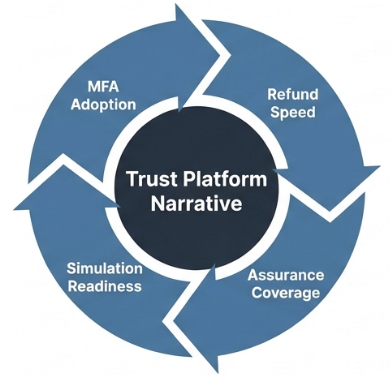
The telcos managing this well are not running more trust-themed advertising; they are building one coherent Trust Platform narrative around customer safety, control and transparency, and then attaching hard proof points to it — multi-factor authentication adoption rates, refund turnaround times, third-party assurance coverage, evidence of breach-simulation readiness. Trust is strengthened by what a company visibly does and how quickly it responds when something goes wrong, not by what it says in a campaign.
What doesn’t work — and what boards should refuse to fund
High media spend layered on top of weak governance does not produce a return; it produces a louder version of the same underlying exposure. Boards evaluating trust-related spend should treat governance maturity as a precondition for that spend being effective at all, not as a parallel workstream to fund separately.

The board has to make an explicit choice
Data governance in this environment is a strategic control system, not a back-office policy document that gets reviewed once a year. Boards that treat it as the latter are effectively choosing, by omission, to let the next incident define the company’s trust position for them.

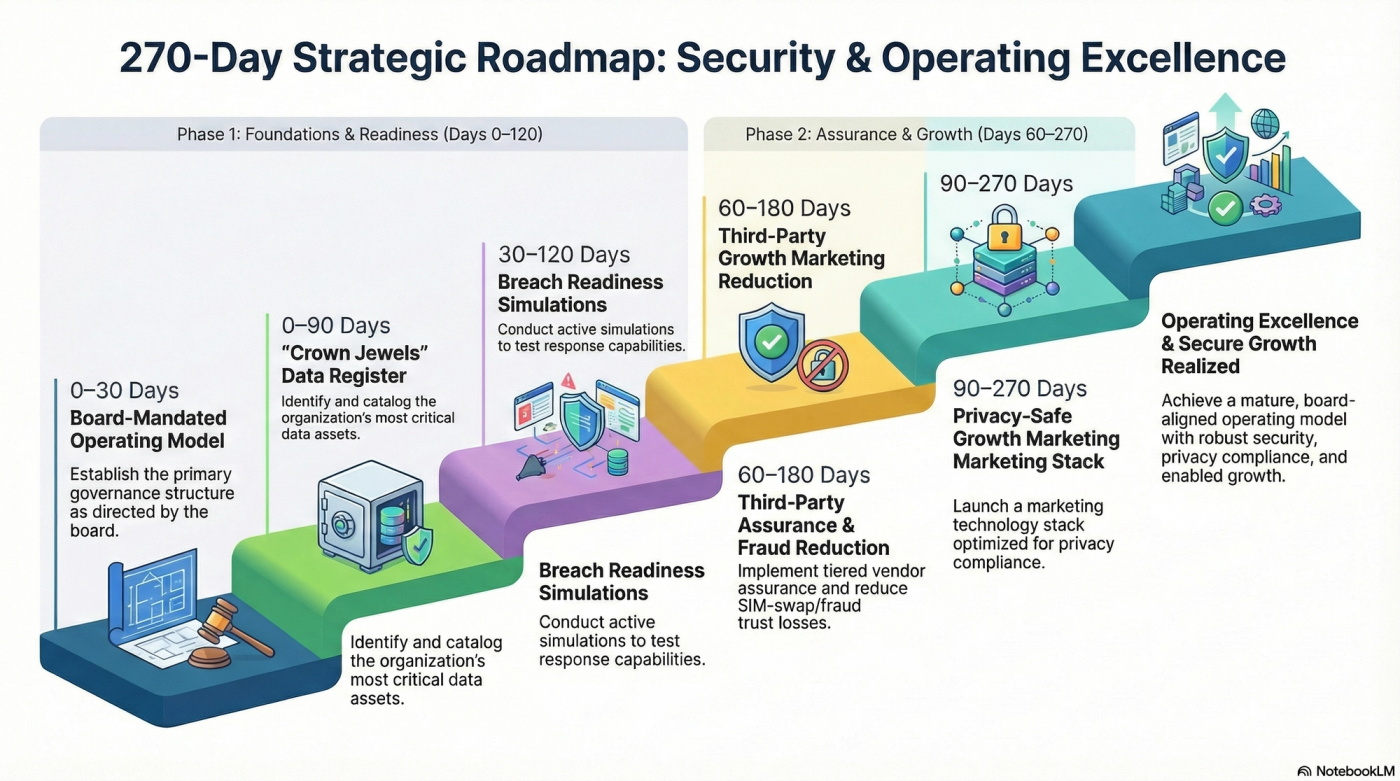
Six actions, 270 days
Turning this into something an executive committee can actually execute means writing it as a set of ExCo commitments with named owners, hard timelines and measurable KPIs — execution, not another strategy deck. The specifics vary by telco, but the discipline of assigning ownership and a deadline to each action is what separates a plan that gets implemented from one that gets filed.
What a two-week diagnostic actually delivers
Trust recovery is not a campaign; it is a system, and a short diagnostic sprint can establish the baseline for building one. In practice that means leaving with a board-ready Trust Risk Register and its mitigations, a Data, Risk & Trust operating model with a defined charter and meeting cadence, a 90-day roadmap tied to a KPI dashboard covering trust and NPS, opt-in rates, complaint volumes, fraud harm, and detection-and-response times, plus a set of marketing "red lines" that keep performance media consent-first by design. It is a starting inventory, not a finished transformation — but it converts trust from an abstract concern into a set of numbers an ExCo can actually manage quarter over quarter.