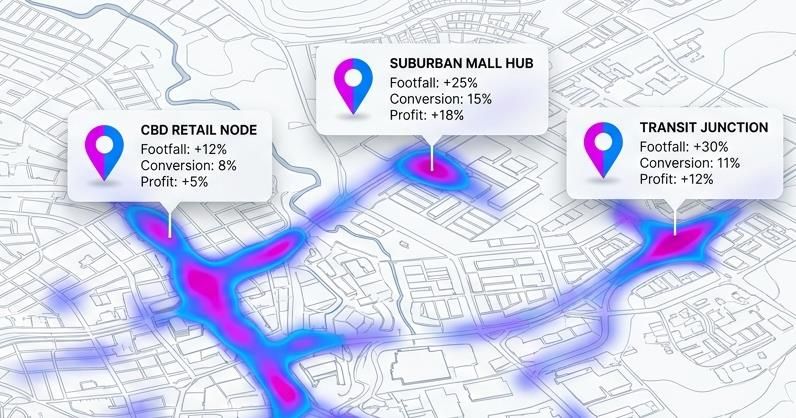
Footfall tells you people showed up. It doesn't tell you whether the location was ever worth showing up to. Retailers across East Africa are still confusing the two.
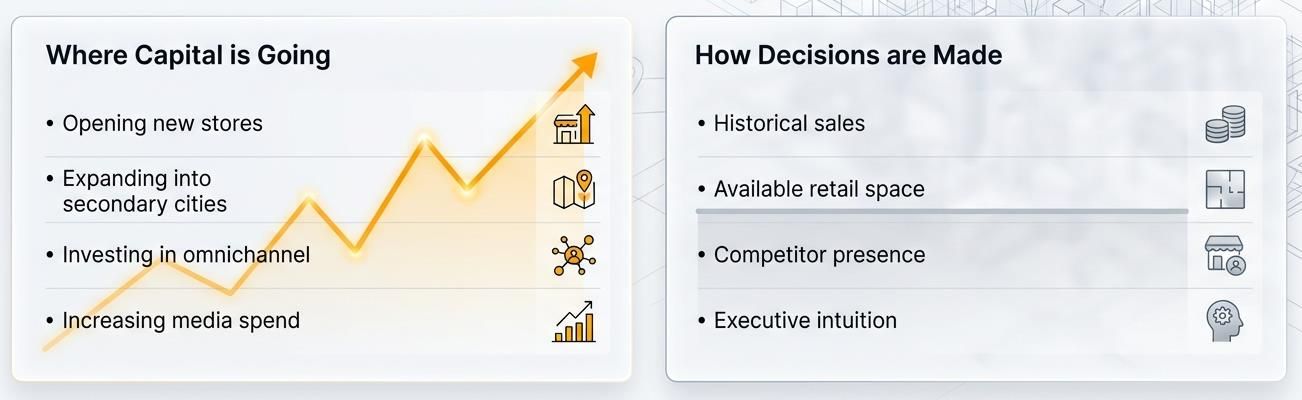
Retailers across East Africa are expanding fast — new stores, entry into secondary cities, growing omnichannel operations — and in most cases, the decisions about where to put that investment are still being made the old way: on historical sales figures, whatever retail space happens to be available, and executive intuition about a neighbourhood. None of those three inputs tells you where your customers are actually moving right now, which is precisely the question that determines whether the next store makes money or just makes footfall numbers look busy.
Retail is expanding. Measurement isn’t keeping up.
Capital is flowing into new stores, secondary-city expansion, omnichannel experience and rising media spend, all at once. Location decisions funding that expansion, though, are still largely being made on the same three inputs as a decade ago — historical sales, available space, and gut feel about competitor presence — rather than on any live picture of how customers actually move through a city. The next real competitive advantage in retail will belong to whoever closes that gap first.
High footfall doesn’t always mean high value
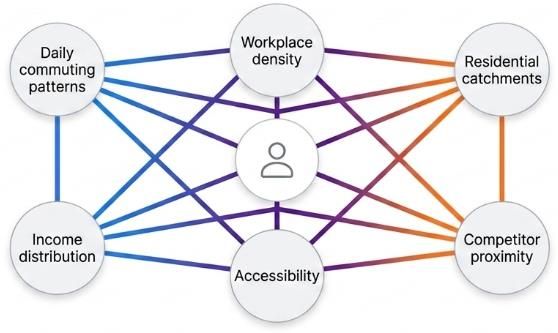
Footfall, impressions and traffic counts only measure activity — they say nothing about whether that activity is profitable. Optimising site selection and outdoor media for raw traffic rather than the customer behaviour behind it routinely leads to inefficient investment, because footfall measures movement while growth measures value, and the two are not the same curve. The retailers getting this right are measuring catchment quality, customer overlap between their own locations, and competitive saturation — the things that actually predict whether a location converts, rather than just whether people walk past it.
Geography has become behaviour
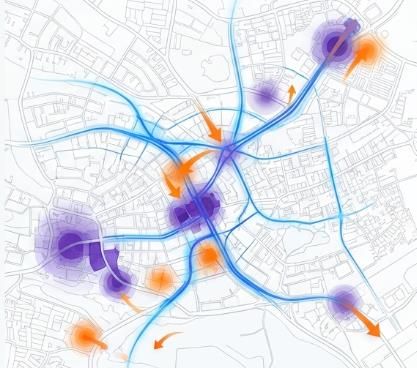
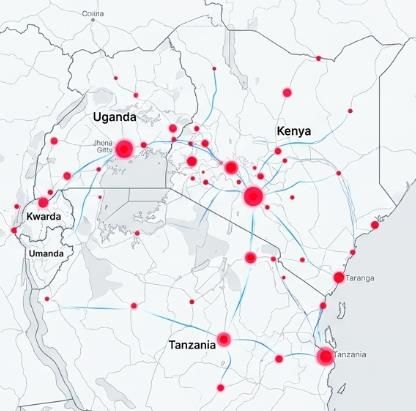
Where someone lives is a weak predictor of where they will actually shop. Understanding how a customer moves throughout their day — the commute, the workplace, the errands run on the way home — provides far deeper insight than a home address ever could, which is why understanding customer movement is becoming more commercially valuable than simply counting how many customers visited.
Outdoor media is still bought like it’s 2015
Most out-of-home campaigns are still planned against vehicle traffic volumes, billboard visibility and whatever inventory happens to be available, with the underlying data — traffic counts, census figures, points of interest — sitting in disconnected silos rather than one unified view. What that baseline misses entirely is audience movement, proximity to actual retail destinations, real purchase journeys, and how close a placement sits to competitors. Outdoor media planned around where customers actually travel performs differently to outdoor media planned around where the traffic counter happens to be installed.
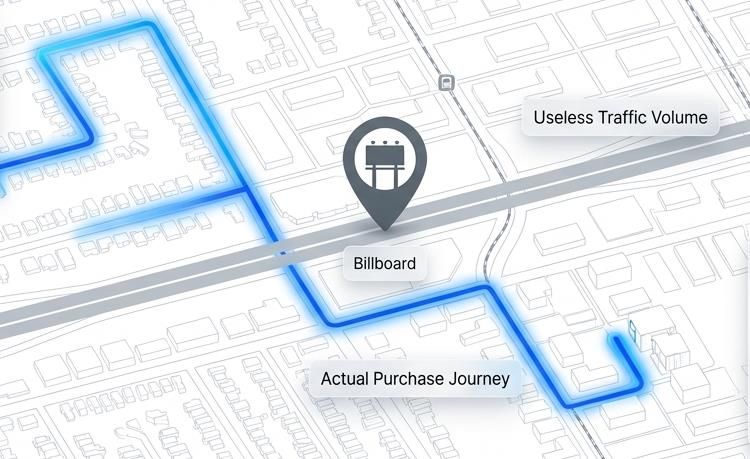
What OOHna does differently
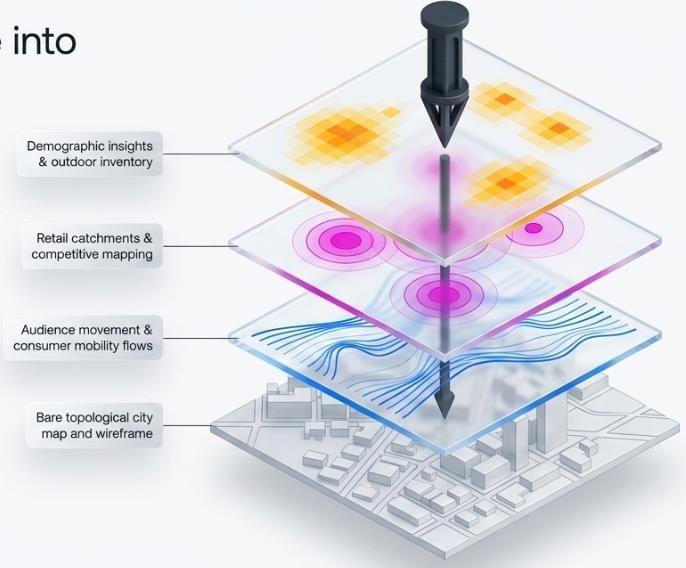
Closing that gap means treating location intelligence as a core planning capability, not an occasional mapping exercise run once before a big decision. OOHna combines demographic insight and outdoor inventory data, retail catchment and competitive mapping, and audience movement and mobility flows into a single decision-making platform, so that a site selection or media placement decision is informed by all three layers at once instead of whichever one happened to be easiest to pull.
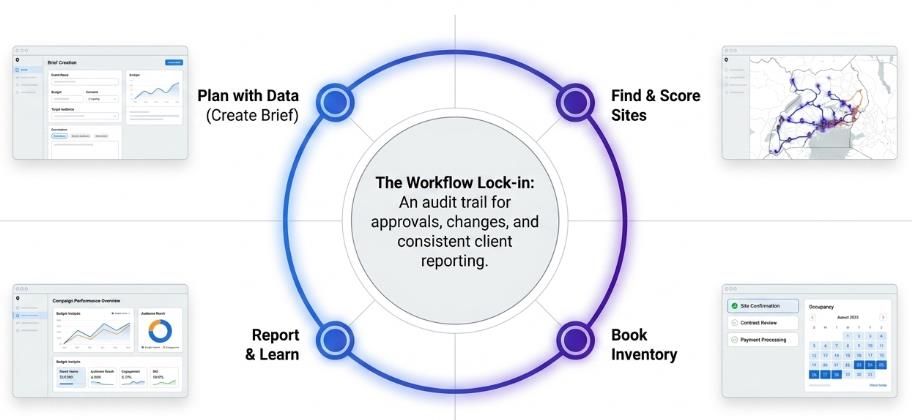
From location data to a repeatable workflow
In practice, that platform turns location intelligence into a continuous workflow rather than a one-time study: searching and scoring candidate sites against consistent map-based data layers, managing real-time inventory and occupancy through booking workflows, and reporting performance through standardised dashboards covering reach, coverage and exportable results — briefing to reporting, in one place, with an audit trail for every approval and change along the way. The result, in the platform’s own framing, is faster planning, better ROI, and measurement a client can actually trust.
Five questions every retail leader should be able to answer
Making expansion and media decisions without understanding customer movement leaves growth to chance rather than to strategy. Before the next site or media placement is approved, it is worth being able to answer: where does our highest-value audience actually travel? Which competitors share our customer catchments, and are we even aware of it? Which of our own stores are quietly cannibalising each other’s sales? Which locations deserve more investment than they are currently getting? And which outdoor placements are genuinely influencing purchase behaviour, as opposed to just accumulating impressions?
Location intelligence is becoming a boardroom capability
The next generation of retail winners in the region will be the ones making sharper decisions about where growth already exists, rather than guessing at where it might. As competition intensifies, location intelligence is on track to become a boardroom-level capability rather than a marketing department tool — because the decisions it informs, store locations and multi-year lease commitments, are boardroom-scale decisions in the first place. The organisations ready to stop reacting to demand and start predicting where it will form next are the ones who will be asking Datalytics for that view before their competitors do.