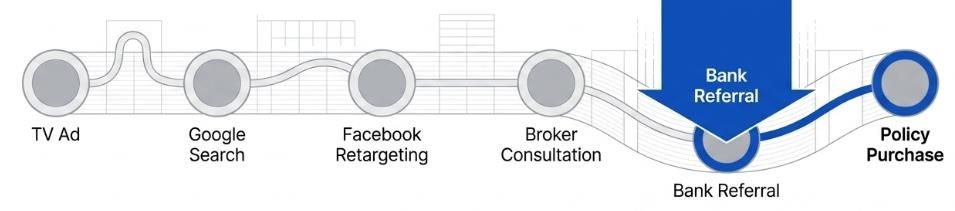
A customer sees a TV ad, searches on Google, talks to an agent, gets a referral, and buys three months later. Most insurers still can't say which of those touchpoints actually earned the sale.
Picture a fairly typical insurance purchase: a customer sees a TV ad, searches the brand on Google a week later, speaks to an agent at a branch, gets a referral from a friend who already has a policy, and finally buys three months after that first ad aired. Which channel gets the credit for that sale? Most insurers cannot answer with any confidence — not because they lack data, but because the data they have was never built to answer that particular question.
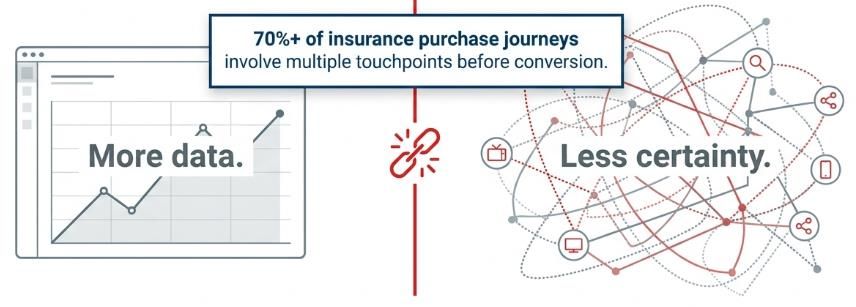
More data, less certainty
Insurance marketers today have access to more data than at any point before, and yet less certainty about what is actually driving premium growth. The dashboards report marketing performance in exhaustive detail — impressions, clicks, leads — but performance reporting and impact measurement are not the same thing, and the industry has largely built the former while assuming it implies the latter. The future competitive advantage in insurance will not be won through media buying; it will be won through measurement.
Growing faster than the market, with less visibility than ever
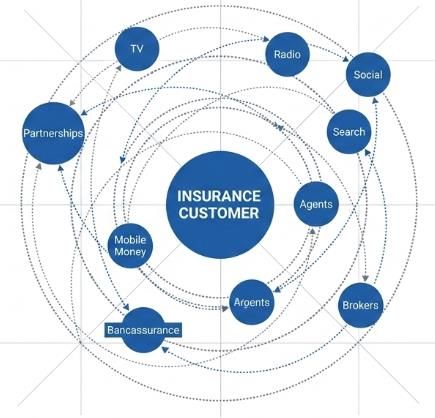
East African insurers are under real pressure to outgrow a market where penetration remains low, acquisition costs are climbing, competition is intensifying, digital adoption is accelerating, and entirely new distribution models — bancassurance, mobile-money-linked cover — are emerging alongside the traditional agent network. The irony is that the more channels an insurer adds to chase that growth, the harder it becomes to know which of them is actually responsible for it.
Insurance journeys don’t travel in straight lines
Insurance is one of the worst-suited categories for last-click measurement, precisely because purchase journeys rarely move in a straight line from ad to sale. Most attribution systems default to crediting the final touchpoint — often a bank referral or an agent conversation — while systematically undervaluing the channels that created the demand in the first place, whether that was a TV ad three months earlier or a search query the week before.
Leads are not premiums
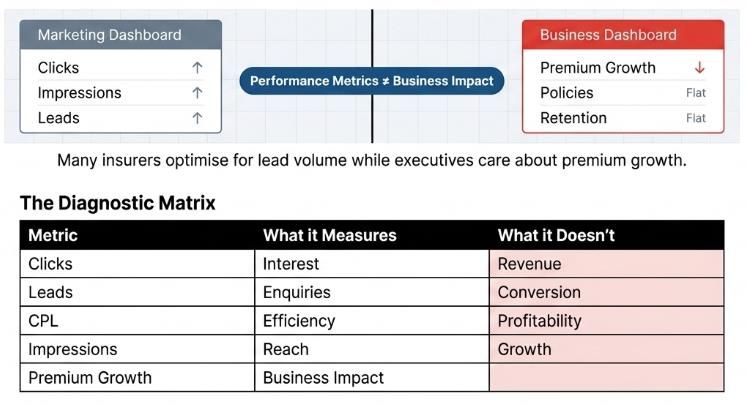
Optimising a marketing programme for lead volume creates a convincing illusion of growth, because the number goes up while the outcome that actually matters may not move at all. The recurring failure here is structural: many insurers are managing toward clicks, leads and cost-per-lead, while their executives are being judged on premium growth — and those are simply not the same metric measured two ways.
The channels driving sales are often invisible to the dashboard
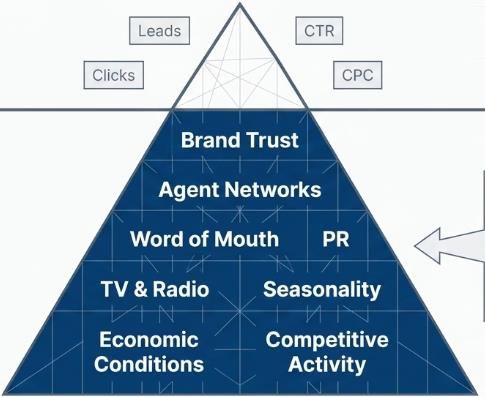
A meaningful share of what drives an insurance purchase — brand trust built over years, agent networks, word of mouth, even seasonality and competitive activity — never shows up in a digital attribution report at all. Ask most insurance marketers what percentage of premium growth came from advertising versus distribution versus market conditions, and they cannot answer with any confidence, because the tools they rely on were never built to see those factors in the first place.
Privacy changes are making this harder, not easier
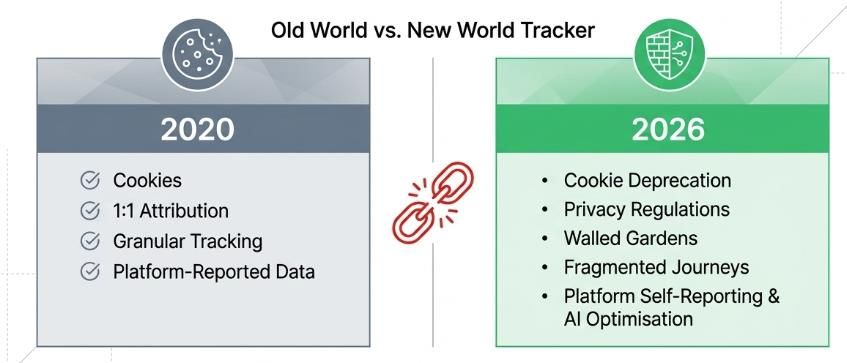
Cookie deprecation, tightening privacy regulation and the growth of walled gardens are pushing the whole industry from attribution measurement toward contribution measurement, because individual-level tracking is becoming less available at exactly the moment marketers need it most. Ad platforms can report what happened inside their own walls; none of them can explain the total business impact of a campaign that touched a customer across five different channels.
Why global advertisers are returning to Marketing Mix Modelling
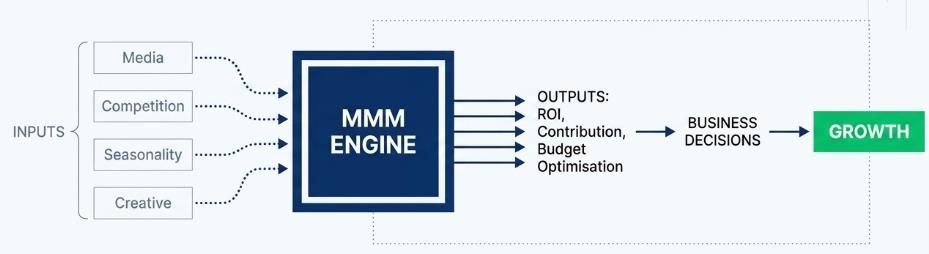
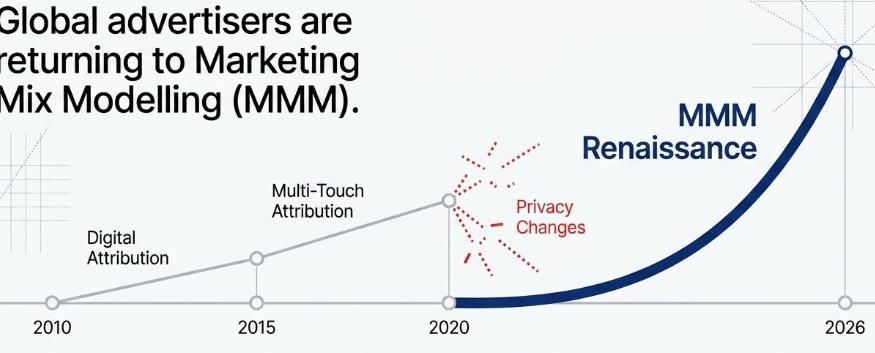
The question the industry is learning to ask has quietly changed from "what generated the click?" to "what generated the growth?" — and that shift is why the world’s largest advertisers are returning to Marketing Mix Modelling to answer it: which channels are actually driving growth, where diminishing returns are starting to appear, how budgets should shift in response, and what the true incremental impact of marketing spend is, independent of what would have happened anyway.
Misallocation costs more than underinvestment
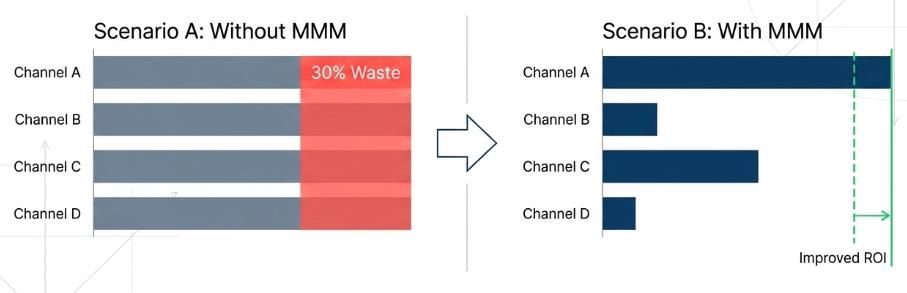
The most expensive mistake in a weak-measurement environment is rarely spending too little overall — it is spending the right amount in the wrong places. When measurement is weak, high-performing channels stay underfunded because nobody can prove they are working, inefficient channels stay protected because nobody can prove they are not, budget decisions default to opinion, and growth slows even as total spend increases. Often the biggest available growth opportunity is not a bigger budget — it is reallocating the one that already exists.
Measurement should inform decisions, not just explain the past
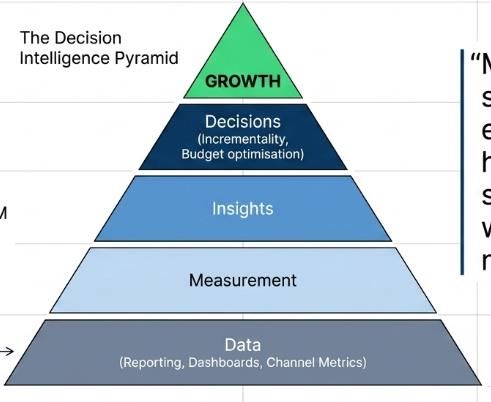
Data without rigorous measurement behind it is just noise dressed up as insight. The point of building better measurement is not to produce a more detailed report on what already happened — it is to inform what an insurer should do next, before the next budget cycle repeats the same misallocation.
Introducing Datalytics MMM
In a market where every channel is happy to claim credit for a sale, Marketing Mix Modelling is designed to settle the question with evidence rather than assertion. Datalytics MMM connects marketing spend to business impact directly, helping insurers understand what is actually driving premium growth, identify where returns are diminishing before the budget catches up to it, optimise future media allocation, quantify each channel’s real contribution, and ultimately lift marketing ROI across the whole portfolio — not just the channels that happen to be easiest to measure.