FMCG brands are making billion-shilling media decisions without benchmarks. Buying media without them converts budget into exposure, not market share — and the gap between the two is bigger than most planners assume.
Attention is bought. Whether that purchase turns into market share depends entirely on the intelligence behind the buy — and across East Africa, most FMCG media budgets are still being deployed without the benchmarks that intelligence requires. The result is not that the money is wasted outright; it is that it converts reliably into exposure and unreliably into growth, and nobody planning the next campaign has the data to tell the difference in advance.
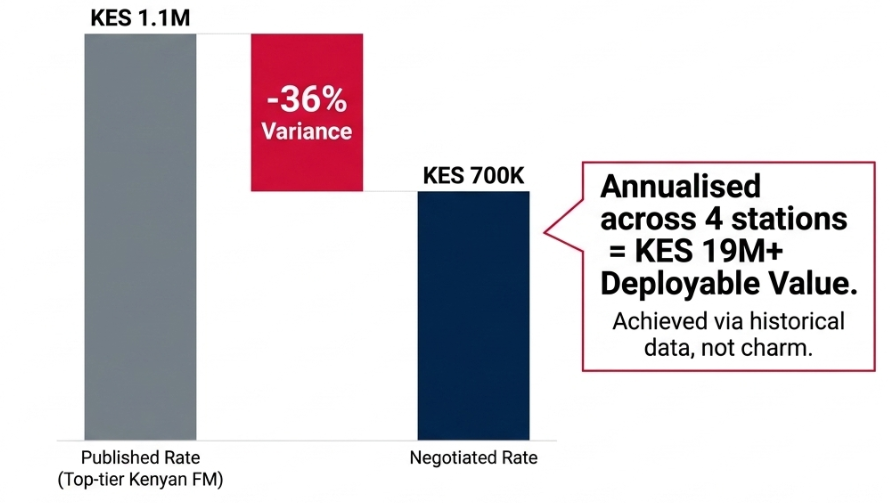
A 36% rate variance is not a rounding error
The scale of what gets left on the table is easy to underestimate until you see a real number: one major FMCG client, working from documented rate intelligence rather than the rate card alone, saved KES 400,000 on a single radio spot. Multiplied across a media plan running dozens of spots a month, that is not a negotiating tactic — it is the difference between a plan that performs and one that merely runs.
Patterns no single campaign can show you
Individual campaigns are too short-lived to reveal the structural patterns that actually drive value — rate seasonality, format-level delivery variance, the real relationship between spend and share. Roughly eleven years of longitudinal rate data across radio, TV, digital, print and outdoor is what it takes to see those patterns clearly, because they only emerge once enough annual planning cycles are stacked on top of each other to separate signal from noise.

Outdoor share is misjudged by 15 to 20 points
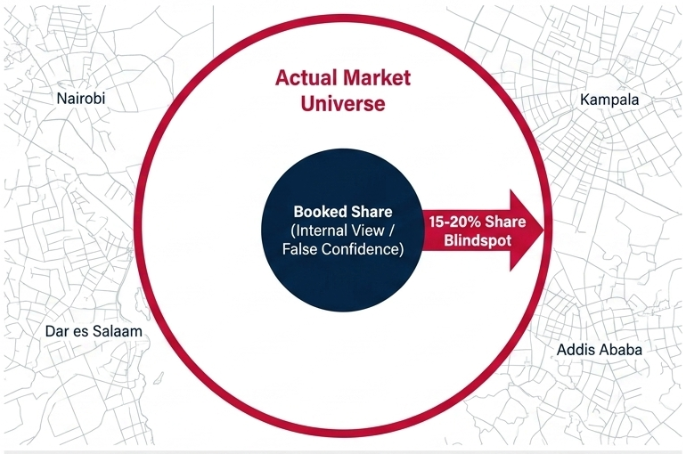
Out-of-home is where the intelligence gap shows up most starkly. Brands routinely measure their outdoor share against booking systems rather than the total available market universe, which creates a false sense of coverage — and format-level analysis consistently reveals a gap of fifteen to twenty percentage points between what a brand believes it delivered and what it actually delivered.
Digital’s false precision problem
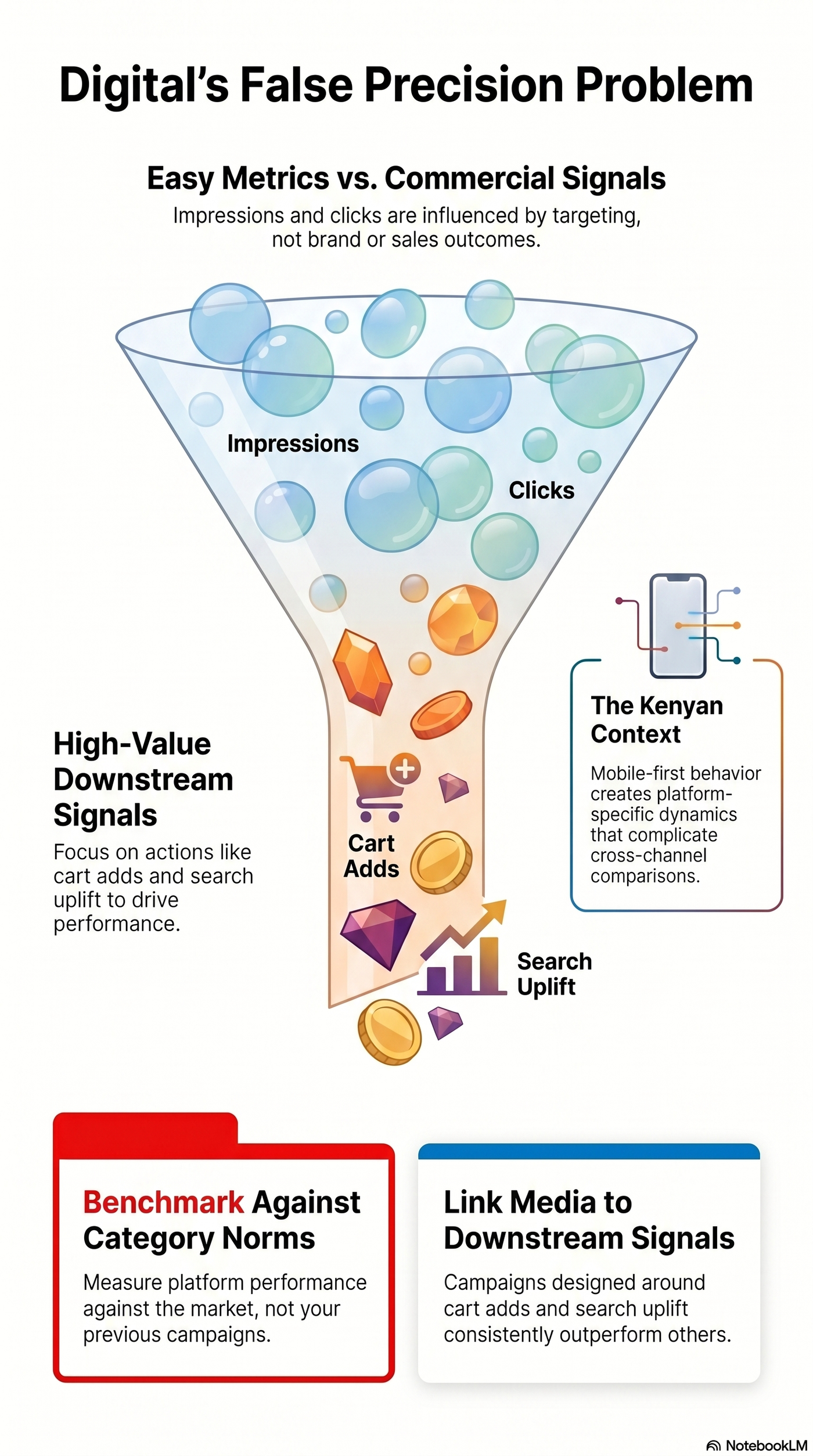
Digital measurement suffers from the opposite failure mode: it looks precise because the dashboards report clean numbers, but those numbers are often optimised for the metrics that are easiest to capture — clicks, impressions, reach — rather than the ones that reflect actual commercial impact. Precision in reporting is not the same thing as accuracy about what drove sales.
Spend, voice and share are three different numbers
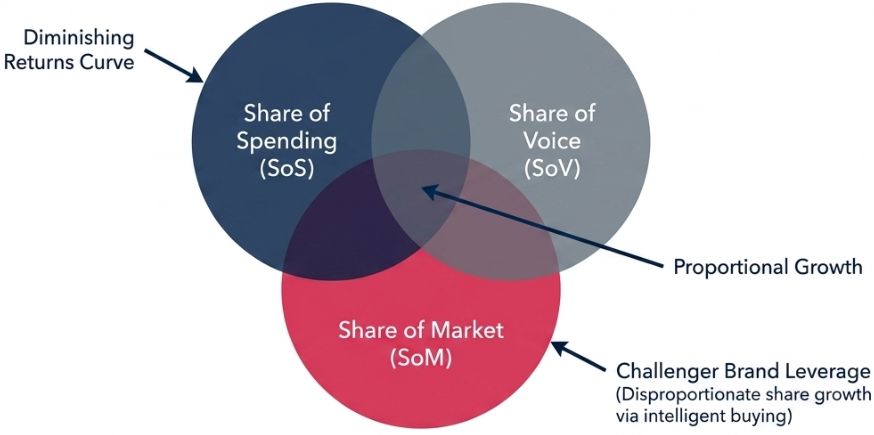
Media spend, share of voice, and market share measure three genuinely different things, and treating them as interchangeable is one of the most common planning errors in the region. Conflating them leads directly to overspending without the proportional share growth that should justify it — a brand can increase spend and voice substantially and still see market share barely move, because voice and share are related but not the same lever.
What closing the gap is actually worth
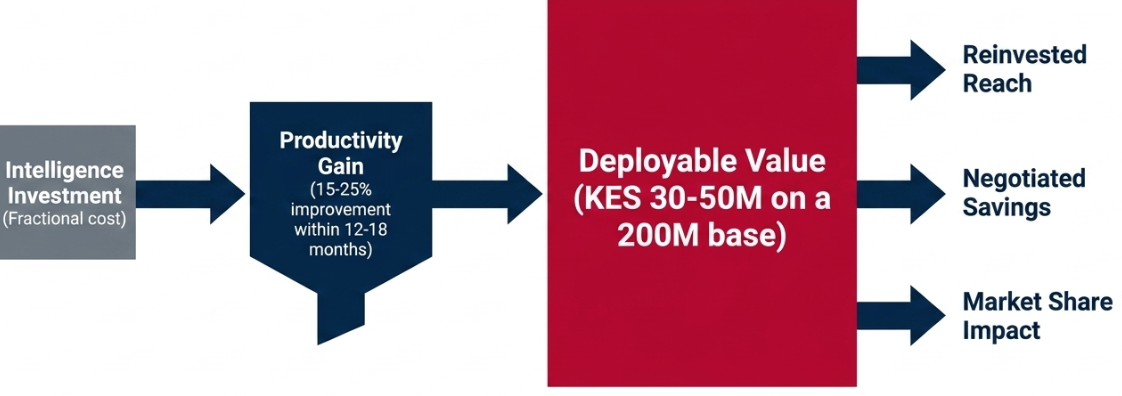
On a KES 200 million annual media budget, the kind of variance described above is not a rounding error either — it translates into KES 30 to 50 million in annual deployable value, roughly a 15 to 25% productivity gain on the same spend. The mechanism is straightforward: intelligence investment produces a productivity gain, the productivity gain frees up deployable value, and that value compounds into measurable market share impact over successive planning cycles.
What Saracen Intelligence actually measures
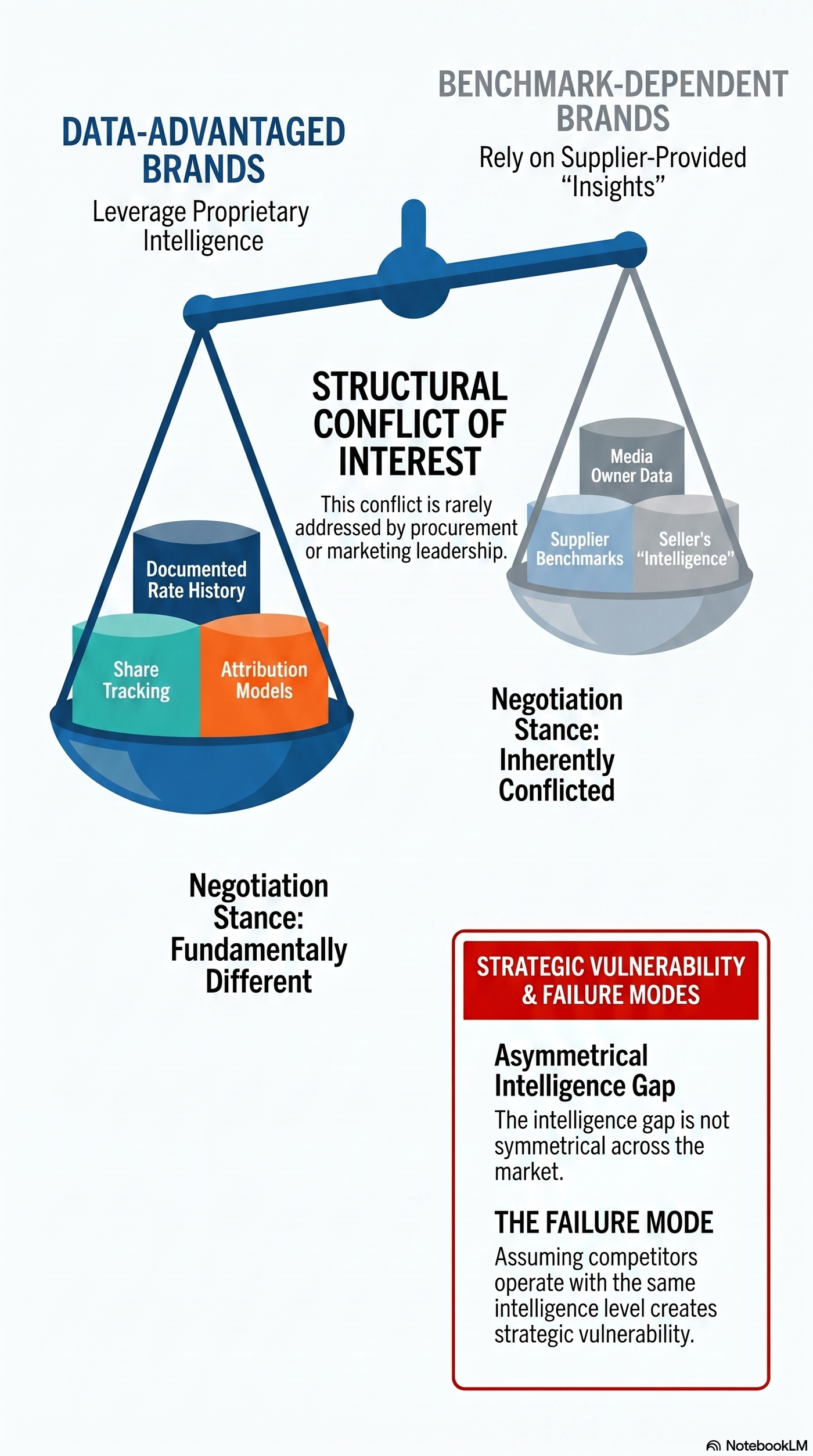
Closing this gap for FMCG brands is the job of four standalone products built specifically for the East Africa market: an eleven-year longitudinal rate-benchmarking database spanning radio, TV, digital, print and outdoor; an independent out-of-home universe analysis that tracks share of voice against total market inventory rather than booking data alone; an FMCG share-of-market intelligence layer that connects media investment directly to category position and movement; and a digital performance benchmarking product that compares brands against category norms rather than platform-reported vanity metrics. Together, the intent is simple — move brands from guessing at media decisions to governing them with documented, compounding intelligence.